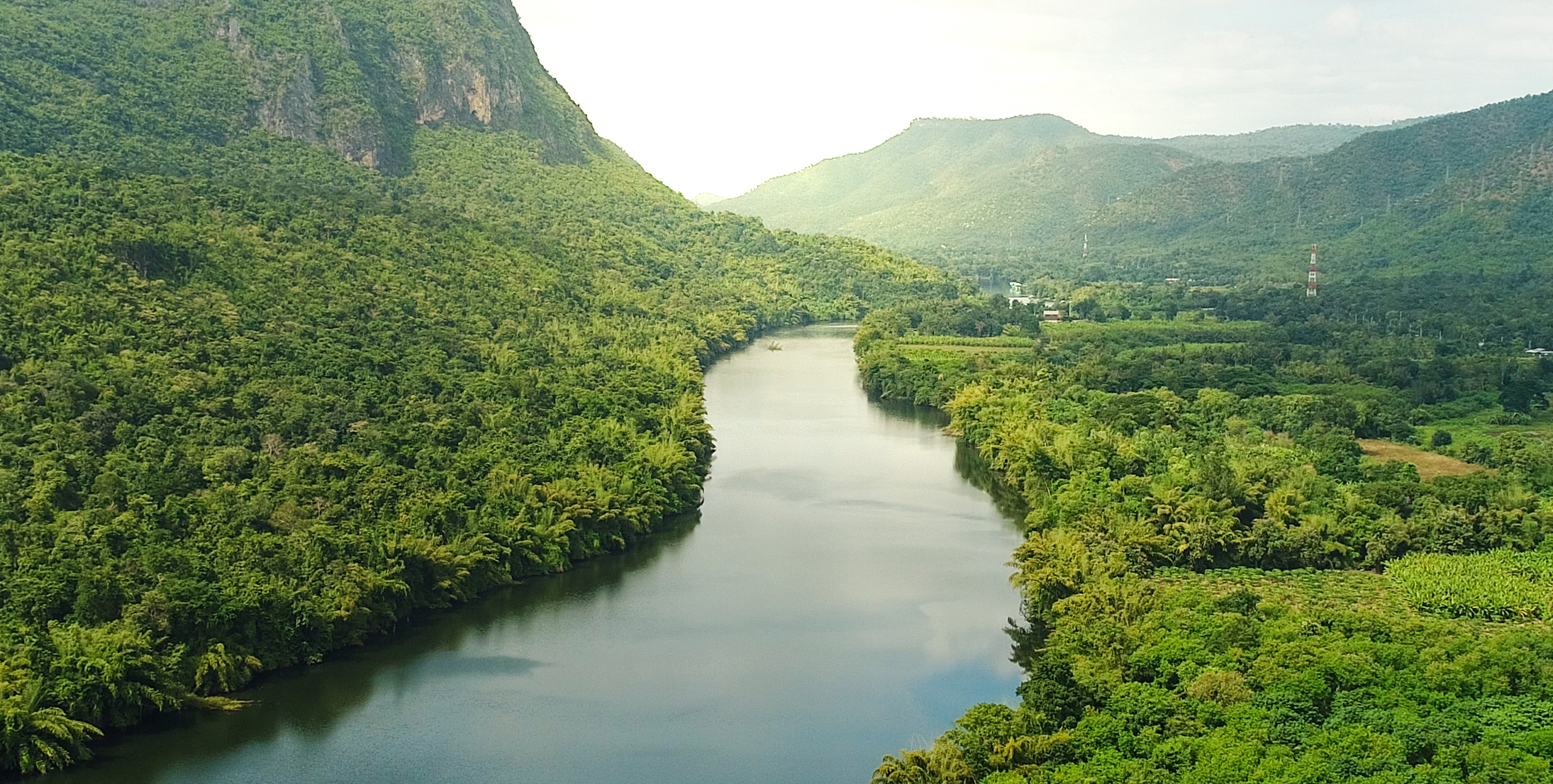
Our Commitment: Water is a critical natural resource. Post is committed to taking action to reduce overall water consumption and effectively manage wastewater discharge to protect the health of local watersheds. To be a responsible company, our efforts related to water stewardship must be aligned with providing high quality and safe products to our consumers. We also realize that not all water is equal, so we are committed to assessing our water impact, particularly in high water stress environments.
Post supports UN Sustainable Development Goal (SDG) 6 and ensuring the availability and sustainable management of water and sanitation for all. We all play a role, across the world, to work together in addressing shared water challenges including water quantity, water quality, water governance, important water-related ecosystems, water, sanitation and hygiene (WASH), and resiliency to extreme weather events.
- In this Section
- Environmental Data
- GHG Emissions
- Water Stewardship
- Biodiversity and Deforestation
- Sustainable Packaging
- Waste Minimization
- Collective Action
Post is committed to evaluating our water impacts, particularly in high water stress environments.
Weetabix is committed to reducing water consumption by 20% by 2025 (2015 baseline).
Our Progress: Post currently has owned and operated production sites and warehouses and distribution centers in North America and the United Kingdom. Post maintains an annual global water risk assessment to determine sites located in regions of potentially high water stress using the following data sources:
- World Resources Institute (WRI) Aqueduct Water Risk Atlas
- WWF Water Risk Filter
- FEMA National Risk Index
Based upon our fiscal year 2025 assessment, Post has identified the following breakdown of sites and water use by water stress level projected to 2030:
| 2030 Water Stress Level | Production Sites | Incoming Water: Groundwater | Incoming Water: Municipal |
|---|---|---|---|
| High | 5% | 0% | 5% |
| Medium | 19% | 21% | 13% |
| Low | 76% | 79% | 82% |
| Water Stress Locations 2030 Projection |
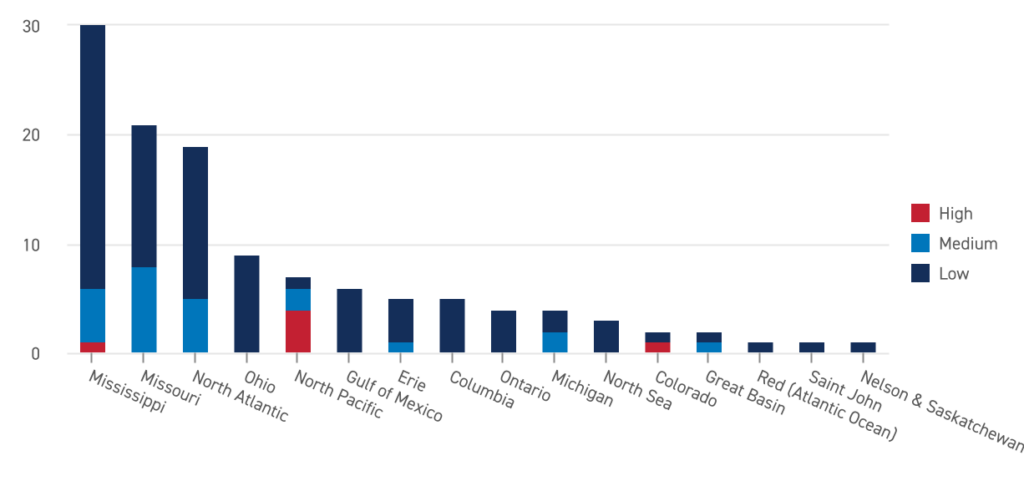
We use the results of our annual global water risk assessments, combined with our water and wastewater performance data, to inform decisions on further assessment, actions and investments. A priority focus is placed on sites located in potentially high water stress geographies to confirm sound water stewardship practices and consider watershed engagement opportunities. The following provides a breakdown of production sites and 3rd-party warehouse and distribution sites by major river basin and projected 2030 regional water stress level.
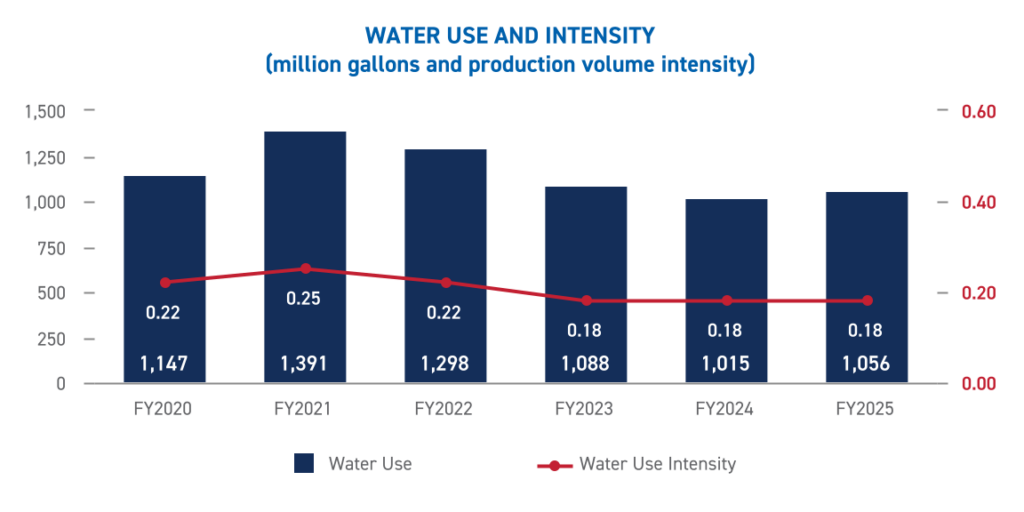
Globally, we source 56% of incoming water from municipal or third-party providers and 44% from groundwater sources. Our water use increased by 4% compared with fiscal year 2024, but our water use intensity decreased by 3%. Our wastewater discharge volume for fiscal year 2025 was 1,778 million gallons for fiscal year 2020 baseline sites and 1,992 million gallons including new operations.
Post also completes and annual screening of global ingredient and packaging supplier locations to evaluate sourcing from regions of potentially high water stress using the following data sources:
Based upon the fiscal year 2025 assessment, Post has identified the following breakdown of supplier locations by water stress level:
| 2030 Projected Water Stress Level | Current Supplier Locations – 2030 Stress Projection |
|---|---|
| Very High | 1% |
| High | 13% |
| Medium | 18% |
| Low | 25% |
| Very Low | 43% |
The supplier locations in areas with potentially very high water stress are in China, India, Pakistan and the United States. Additional countries with potential high stress include Belgium, Canada, Chile, China, France, India, Israel, Mexico, Pakistan, Peru, South Africa, Spain, Thailand, Turkey, the United States and Vietnam.